
How to verify GEO effectiveness?
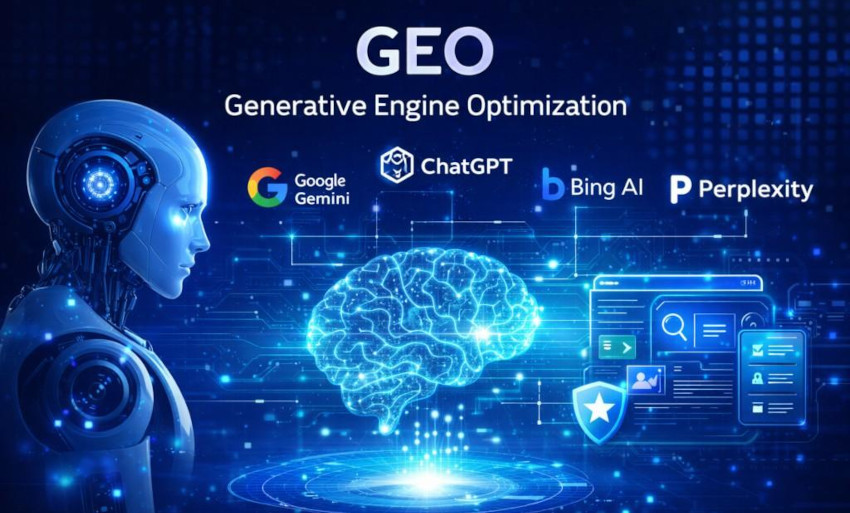
After optimizing on-site and off-site GEO content and establishing brand authority, the next step is to verify the results—whether your marketplace brand and content have been “recognized” and cited in responses across the six major AI platforms: Google AI Overview, ChatGPT, Gemini, Perplexity.ai, Claude, and Copilot.
This article provides a detailed guide on the operational methods for verifying GEO effectiveness on each of these six AI platforms, allowing you to quickly assess results. A reusable tracking record table is also included for your convenience.
Example Search Query Used in This Article
“Where can I buy cheap glasses online in CA?”
Google AI Overview
https://www.google.com/
Google Search’s AI Overview appears at the top of search results as a summarized answer, with direct citations of source links. This is currently the most straightforward entry point for GEO verification—if your content appears in the summary, it indicates that Google has recognized it as an authoritative source.
Steps
Open Google Search and enter your core question or keyword.
Look at the AI Overview section at the top of the search results.
Check whether your brand name or content excerpt appears in the summary.
Click the source links on the right to verify the exact citation location.
Appearing in the AI Overview summary is the strongest signal of GEO success, demonstrating that the search engine has adopted your content as an authoritative source.
ChatGPT
https://chatgpt.com/
ChatGPT is one of the most widely used AI conversational platforms. GPT-4o and newer versions support real-time web browsing, making them particularly effective for verifying recently published content.
Steps
Open ChatGPT and select a model version that supports web browsing.
Enter your article title or core question.
Check if the response mentions your brand or includes content snippets.
Follow up with “What are your sources?” to confirm the citation origin.
Standard models have knowledge cutoff dates. If your content is relatively new, it is recommended to enable the Search (web browsing) feature before verification.
Google Gemini
https://gemini.google.com/
Gemini is Google’s native AI platform and is highly integrated with the Google Search ecosystem. Its indexing and citation logic closely resembles that of AI Overview, making it a vital channel for assessing content visibility within Google’s AI framework.
Steps
Open Gemini and enter your core question or article title.
Examine whether the response includes references to your content or brand.
Click “Drafts” or the source icon below the response to confirm the citation URL.
Since Gemini shares a portion of its index with Google Search, passing verification here often implies a higher likelihood of being included in AI Overview.
Perplexity.ai
https://www.perplexity.ai/
Perplexity.ai is one of the fastest-growing platforms in the AI search space. Each response explicitly lists source webpages and displays the specific passages cited, making it the most transparent tool for GEO effectiveness verification.
Steps
Open Perplexity.ai and enter your article title or core question in the search bar.
Check whether your brand’s page links appear in the search results.
Expand the source list to view the exact content excerpts that were cited.
For deeper analysis, switch to “Academic” or “Writing” mode.
If your page is directly cited, it indicates that GEO optimization has taken effect within the AI knowledge base and that your content’s authority is recognized—this is one of the most straightforward verification paths.
Claude
https://claude.ai/
Developed by Anthropic, Claude is known for accurate and source-attributed responses. When web search is enabled, Claude provides source annotations in its answers, allowing clear determination of whether your content has been referenced.
Steps
Open Claude and ensure the Web Search feature is enabled.
Enter your article title or core question.
Observe whether the response cites your content or provides information consistent with your article.
Click the source annotations to verify the exact page address referenced.
Claude adheres to standardized source attribution. If your content appears in the citation list, it serves as strong evidence of successful GEO optimization.
Microsoft Copilot
https://copilot.microsoft.com/
Microsoft Copilot (formerly Bing Chat) is built on GPT-4 and the Bing search engine. Responses include source annotations from webpages indexed by Bing. It serves as a supplementary verification channel for assessing content exposure within Microsoft’s search ecosystem.
Steps
Open Microsoft Copilot and enter your core question or article title.
Examine whether the response cites your content, paying attention to the source annotation area.
Cross-reference the findings with results from Google AI Overview.
Copilot may sometimes summarize or paraphrase content, so the citation format may differ from the original text. It is advisable to base your assessment on whether your brand name or URL appears in the response.