logo

Powered by Google’s Search Specialist, HKG Digital is an SEO Agency based in Hong Kong, offer SEO, SEM/PPC, Social Media Marketing and Web Design services.

SEO Search Engine Optimization

SEM|PPC Search Engine Marketing/Pay Per Click

Social Media Marketing

E-Commerce Services

Web Design & Development

Contact Us Now!


Free Consultation on SEO, SEM/PPC, Social Media and Web Design

+852 6112 3129 / 5343 9810 / 5743 0073

info@hkgdigital.com

Unit 2129, 21/F, One Pacific Centre, 414 Kwun Tong Road, Kwun Tong, Kowloon, Hong Kong


Mon to Fri 10:00 - 19:00

+852 6112 3129 / 5343 9810 / 5743 0073

info@hkgdigital.com

Gemini | ChatGPT | Grok | Copilot | DeepSeek | Doubao | AI Platforms

HK GEO Agency

    * Input Website URL, Email and Contact No. to get Free GEO Consultation!
    digital-marketing-girl-02

    What is GEO? Why GEO/AEO/AI SEO?

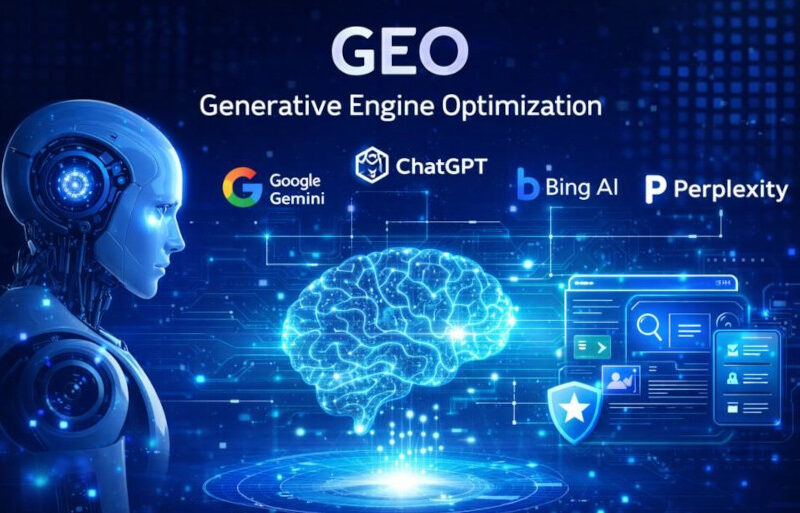
    GEO: Generative Engine Optimization, abbreviated as GEO. It is also commonly referred to in the industry as AI SEO search optimization.

    In simple terms, SEO is about getting your website ranked among the top results on search engines; while GEO is about having your content selected by AI engines like ChatGPT, Perplexity, and Gemini, and presented as the “standard answer” recommended to users — displayed directly without requiring them to click.

    Why Must GEO Be Implemented Now? In the AI era, user traffic is shifting from search engines to AI-powered Q&A platforms. GEO enables brands to seize the AI traffic gateway, gain priority recommendation during users’ decision-making process, and achieve precise customer acquisition with improved conversion rates.

    The goal of GEO is to shift the core focus of corporate competition—from the past emphasis on “driving user clicks” to “earning the trust and citation of AI.” Its core value lies in ensuring that, in the “zero‑click” era where AI delivers answers directly, high‑quality information can secure an “authoritative seat” in AI outputs, thereby influencing users’ consumption or decision‑making behaviors.

    了解更多

    Effective Across Major AI Platforms

    Our GEO services are effective across all major AI platforms. Below are some of the more popular AI assistant tools:

    Google Gemini

    OpenAI ChatGPT

    Microsoft Copilot

    Manus AI

    Tencent Yuanbao

    Qwen

    Nami AI

    Google AI Overview

    Grok

    Meta AI

    Poe

    WeChat AI

    ERNIE Bot

    Douyin AI

    Google AI Mode

    Perplexity

    Claude AI

    DeepSeek

    Doubao

    Baidu AI

    Kimi AI

    Supports 4 major AI platforms in Hong Kong

    And is also effective with other AI Q&A tools!

    Google Gemini

    Google AI Overview、AI Mode

    ChatGPT

    OpenAI's AI Platform

    Grok

    AI Assistant by xAI

    DeepSeek

    #1 China AI Tool

    1000

    GEO Campaigns

    30000

    Keywords Ranking

    500000

    Backlinks

    99

    Success Rate

    Advantages of GEO (Generative Engine Optimization)

    At its core, GEO (Generative Engine Optimization) is about ensuring that your company, services, or products are preferentially cited and accurately presented by AI systems. The key benefits are:

    Precision Targeting | Cost Reduction

    Filter out low-quality traffic and slash customer acquisition costs by 30%–70%. Target only high-intent regions and users, reducing wasted impressions by over 60%.

    Enhanced Conversion

    AI-driven direct recommendations shorten decision-making time; Content tailored to local needs boosts conversion rates by 25%–40%; Full-funnel integration seamlessly connects the entire process (Exposure → Inquiry → Conversion)

    AI Traffic

    When a brand appears at the top of AI-generated answers, it gains greater trust. Being frequently cited by AI can boost brand search volume by 15% or more. Secure your position at this new traffic gateway—before your competitors do.

    Brand Awareness

    GEO can help your company’s brand secure a top position in AI-generated answers, ensuring that when users ask relevant questions, they see you first. This builds credibility and drives comprehensive exposure for your brand, business, and services.

    Align with the Future Search

    Adapt to AI-powered conversational search to extend your online lifecycle; gain direct exposure in answers without relying on clicks; enjoy long-term, stable traffic with sustainable results.

    Fast Implement | Rapid Results

    No more waiting through months-long optimization cycles! See visible results in just 3–10 business days—seize the AI traffic gateway instantly. Your brand presence goes through the roof, capturing market share at lightning speed.

    Full Platform Coverage

    No matter which AI tool your audience uses, your brand will be seen! One seamless deployment across all mainstream AI platforms — including Gemini, ChatGPT, DeepSeek, and more — covering 99% of AI users.

    Gateway to Consumer Decision-Making

    China now has 515 million generative AI users; 68% of consumers make purchase decisions directly based on AI recommendations; industry competition has shifted from search engine results pages to AI-generated answer boxes.

    SEO + GEO Optimization

    GEO cannot be separated from the foundational optimization of SEO; it requires high-quality content and backlinks to boost authority, so that it can be recommended and cited by AI.

    1,000+ GEO clients recommended by top AI platforms

    網站製作專家

    Why Select Our GEO Company?

    Lower Costs: Save up to 80% compared to traditional online promotion.

    Precise Targeting: Reach only customers with clear needs, boosting conversion rates by over 3x.

    Faster Results: See results within 3–10 working days.

    Full Platform Coverage: Compatible with all major AI platforms.

    Low Cost, High ROI: Maximum returns with minimal investment.

    Dual-Engine: One monthly fee covers both SEO and GEO optimization.

    HK Exlcusive: GEO services are led by former Google Search Specialists.

    Contact Us

    GEO | AEO | AI SEO | FAQ

    GEO is a brand-new promotional channel. Below are some frequently asked questions from clients:

    SEO vs GEO vs AIO vs AEO vs SXO

    Still just doing traditional SEO? In the AI era, it’s already all about GEO and AEO!

    Here are 5 search optimization logics clearly laid out—a must-read for brands chasing traffic.

    SEO – Search Engine Optimization
    Ranks on Google and other platforms via keywords, backlinks, and technical optimization.
    Great for building stable, long-term traffic and establishing brand authority.
    Downsides: slow to show results, heavily impacted by algorithm updates.

    GEO – Generative Engine Optimization
    Gets ChatGPT/Gemini to actively cite your content.
    Capture the AI search dividend and become an authoritative source in AI’s eyes.
    Ideal for brands looking to stake a claim in new traffic channels.

    AIO – AI Optimization
    Precisely gets your brand into AI training data.
    Secure a spot in AI’s “memory” for long-term brand recall.
    Slow to take effect, but the impact is extraordinarily lasting.

    AEO – Answer Engine Optimization
    Targets Google snippets, AI Overviews, and “People Also Ask.”
    Gain exposure even with zero clicks; works well for voice & mobile.
    Traffic comes fast, though the position isn’t always stable.

    SXO – Search Experience Optimization
    After users find you, maximize the experience to drive conversions.
    Optimize page speed, conversion paths, and CTAs all the way through.
    Actually turns traffic into real revenue.

    Quick summary:
    SEO lays the foundation → AEO/GEO capture AI traffic → AIO builds brand mindshare → SXO harvests conversions.

    For growth in 2026, this combo strategy is absolutely a must-have!

    Which industries should implement GEO?

    Which businesses are best suited for GEO? These 3 categories should take priority!
    The following 3 types of businesses see the most significant results:

    1. High-ticket / heavy-decision industries
    Examples: study abroad, immigration, legal consulting, medical aesthetics, renovation, insurance
    Before making a decision, users conduct extensive searches and ask AI. If your content is cited by AI = precise customer acquisition.

    2. Knowledge-based / professional services
    Examples: finance & taxation, corporate management, skills training, career planning
    AI excels at summarizing “authoritative answers,” so professional content is more likely to be recommended.

    3. Local services / vertical niches
    Examples: moving, cleaning, pet hospitals, postpartum care centers
    Users often ask for “reliable XXX recommendations in [city].” When AI names you, that’s prime exposure.

    Conversely, FMCG goods and low-ticket commodity items (e.g., tissue paper, phone cases) are less suitable, as users care more about price than AI recommendations.

    The 5 Most Important Points for Doing GEO

    1. Build a Brand Knowledge Base
    Don’t let AI piece together your brand information from across the web on its own. Organize your core selling points, specifications, FAQs, and even negative responses — this is essentially feeding AI the “answer key.”

    2. Optimize Your Website with AI-Ready Technical Structure
    Use structured data, semantic markup, and FAQPage schemas so that AI crawlers can properly interpret your pages, rather than getting lost in the code.

    3. Align with Semantic Meaning
    AI understands the world through semantic vectors. You need to tightly bind your brand with words like “Best” and “Reliable,” positioning yourself as the “definer” in AI’s perception.

    4. Create High-Information-Density Content
    Move past superficial fluff and return to depth. Use first-hand data, comparative specifications, and real-world case studies — AI is far more likely to cite content that carries genuine expertise.

    5. Build Authoritative Trust Signals
    Establish a cross-channel matrix that includes your official site, third-party platforms, and social media. This makes AI feel that your brand can stand up to cross-verification.

    4 Reasons to Do GEO

    Still on the fence about whether to adopt GEO? Don’t wait until your competitors have already done it.

    The rules of traffic are quietly changing!
    According to forecasts from SEMrush and Gartner, traffic from AI search will surpass that of traditional search by 2028. With the rollout of Google’s own large AI models, this shift may come even sooner. If you don’t start optimizing for AI search now, your competitors will claim the top spots in AI search results and grab the lion’s share of exposure and traffic.

    Traffic with higher value
    On average, each visitor referred by an AI recommendation is worth 4.4 times more than a visitor from traditional organic search. AI search visitors have higher conversion rates because when users click through to your site, they already have a general understanding of your offerings and key selling points, and have compared you with competitors—making them much more likely to convert.

    Your website matters most
    Research shows that in ChatGPT’s responses, 50% of recommendations point to commercial service websites—that is, your own website—followed by social media, news, and other third-party platforms. This indicates that LLMs, when generating answers, often rely heavily on your website as the top-priority source of information.

    The trend is clear
    According to data released by Similarweb, global monthly visits to AI services reached approximately 7 billion in 2025, a year‑on‑year increase of 76%, putting AI traffic on par with mainstream social networks.
    According to IDC data, the global GEO industry market size exceeded $12 billion in 2025, with China accounting for 55.4% of the global total. Companies that proactively deploy GEO strategies have seen their brand visibility increase by more than 300% on average.

    How to Measure the Effectiveness of GEO?

    1. AI Brand Mentions: Measures the visibility and recognizability of brand content in AI search results, reflecting the breadth of brand exposure within the AI search ecosystem.

    2. AI Brand Sentiment: Assesses the emotional tendency toward a brand in content generated by AI platforms, categorized as positive, neutral, or negative, to gauge the brand’s overall image in AI-generated corpora.

    3. Brand Exposure in External Corpora: Counts the number of times a brand is mentioned in third-party websites, news, blogs, and other external content, reflecting the depth of brand dissemination across the broader online landscape.

    4. Referral Traffic from AI Platforms: Measures the volume of visits and interactions driven by content generated from AI platforms (e.g., ChatGPT, Google Gemini, etc.), reflecting the brand’s ability to attract traffic within the AI ecosystem.

    5. Referral Traffic from External Corpora: Tracks actual visits and engagements resulting from brand citations in external websites or content, evaluating the brand’s communication effectiveness across the external ecosystem.

    6. Organic Search Traffic for Brand Keywords: Analyzes changes in traffic from users actively searching for the brand and related keywords on traditional search engines, reflecting brand awareness and user loyalty.

    Can GEO win you clients?

    Answer: Yes! And with pinpoint precision.

    Don’t doubt it—GEO is the dark horse of 2026 for low-cost, high-conversion promotion.

    ✅ 100% precise targeting: People who ask AI have real needs—they’re actively seeking services and ready to close deals. For example, if a user asks “renovation companies in Bao’an, Shenzhen,” chances are they’re planning a renovation soon. Their conversion rate is over 5× higher than general traffic.

    ✅ Low cost, no burning cash: No ad spend, no need to maintain a huge sales team, no racing to the bottom on price. Optimize once, and enjoy stable, long-term AI recommendations—24/7 client acquisition, even on holidays.

    ✅ Works for all industries: Home furnishings & building materials | Factory manufacturing | Local services | Business services | Brick-and-mortar stores | Chain brands | SMEs. As long as your customers ask “city + industry + need,” GEO can bring you clients.

    ✅ Your competitors are already fighting for traffic—while you sit back and take orders. While rivals are still pouring money into traditional promotions and price wars, smart business owners are already doing GEO—letting AI deliver clients to their door, with a steady stream of leads and stable profits.

    🚫 Don’t fall for misconceptions! GEO is NOT:
    ❌ NOT “business location” (that’s traditional local promotion)
    ❌ NOT SEO (SEO boosts search rankings; GEO gets AI to recommend you)
    ❌ NOT pay-to-play advertising (no per-click fees—one investment, long-term returns)

    ✅ In a nutshell:

    GEO is the “free client acquisition channel” of the AI era. Let AI do your promotion, find your clients, and help you close deals. Customers search actively, AI recommends proactively, and orders come to you automatically.

    What Exactly Does GEO Optimize?

    It optimizes AI’s cost of understanding you.

    The clearer and more structured your writing, the easier it is for AI to understand you—and the more willing it will be to use you.
    Conversely, no matter how brilliant your content is, if AI can’t parse it, it might as well not exist.

    At its core, GEO is about writing for human readers—but in AI’s syntax.

    For example, AI prefers “Step 1, Step 2, Step 3” over long, lyrical passages.
    If you present data in a table, AI can extract it directly; if you write it as prose, AI will likely skim past it.
    You’re not trying to please AI—you’re reducing the friction of AI’s translation process.

    Optimization isn’t pandering—it’s translation.

    2026 Hong Kong Top 10 Generative AI Tools

    According to the latest 2026 data from Ahrefs, the following are the 10 generative AI tools with the highest monthly web traffic in Hong Kong:

    ChatGPT – 973K
    DeepSeek – 666K
    Doubao (豆包) – 263K
    Microsoft Copilot – 230K
    Grok – 163K
    Google Gemini – 126K
    POE – 92K
    Perplexity – 88K
    Notion AI – 63K
    Claude – 14K

    How Long Does It Take for GEO to Show Results?

    First, a clarification: this is not paid traffic, so it won’t deliver instant results. It’s a long-term, stable traffic channel.

    1. 7–14 days
    AI crawls a small amount of store data, and the system enters the learning and indexing phase.

    2. 1–2 months
    Natural exposure for accounts/stores begins to rise steadily.

    3. 2–3 months
    Exposure stabilizes, and you start receiving customer inquiries and lead information.

    4. 3–6 months
    A dedicated local traffic moat is formed, making it difficult for competitors to catch up.

    If you want stable, long-term customer acquisition, GEO relies on consistent, day‑by‑day accumulation.

    Which Marketing Methods Will GEO Eliminate?

    Recently, many people have been talking about AI, ChatGPT, and GEO (Generative Engine Optimization). But what truly deserves attention isn’t what it will bring—it’s what it will eliminate. For over a decade, search marketing has revolved around Google SEO. In the coming years, more and more users will ask AI directly and receive answers generated by AI on the spot. Many traditional marketing approaches will face significant disruption.

    ① Content written for search engines, not for users

    In the past, some websites stuffed keywords excessively to boost rankings. For example:

    HK GEO
    GEO HK
    Hong Kong GEO
    GEO Hong Kong
    GEO Agency
    GEO Agency HK
    GEO Company
    Hong Kong GEO Company
    香港GEO
    GEO香港
    GEO公司
    香港GEO公司
    GEO服務
    GEO推廣
    GEO廣告
    GEO優化
    生成式引擎優化

    Although there are plenty of keywords, GEO places greater emphasis on whether the content truly answers users’ questions. AI is more inclined to cite logical explanations, real-world case studies, and data-backed professional insights—rather than keyword-stuffed articles.

    ② Mass-produced, low-quality content

    In the past, publishing dozens of articles a day might still have driven some traffic. In the future, this approach will become increasingly ineffective. That’s because AI synthesizes multiple sources and only cites content that genuinely adds value.

    ③ Clickbait that only pursues click-through rates

    Previously, an exaggerated headline could generate massive clicks. For example:

    “99% of people don’t know this!”
    But in the GEO era, users read the answers summarized by AI directly. If the content itself lacks substance, even the most eye-catching headlines will struggle to gain sustained exposure.

    ④ Relying solely on Google rankings for traffic

    In the past, many businesses had only one way to acquire customers: Google rankings. But in the future, traffic sources will become increasingly diverse—for example, ChatGPT, Google AI Overviews, and other AI search tools. If a brand depends only on traditional search, the risks will keep growing. Companies need to build a content ecosystem that AI can understand, cite, and recommend.

    ⑤ Promoting only oneself without providing value

    Many corporate websites have homepages that say:

    ❌ “We were founded in…”
    ❌ “We have years of experience…”
    ❌ “We have a professional team…”
    None of this helps users solve any real problems.

    What AI prefers to cite are things like:

    ✅ How to solve a problem
    ✅ How to choose the right solution for your needs
    ✅ Data, case studies, and real-world experience

    True marketing isn’t about constantly introducing yourself—it’s about helping users make better decisions.

    So what will truly survive the test of time? Not SEO, not GEO—but the ability to consistently create high-quality content.

    SEO vs GEO

    What’s the core difference in logic?

    SEO: Competing for the top 3/10 rankings in search engines.
    GEO: Making your content directly become the AI’s “recommended answer” (e.g., your content embedded right in Gemini/ChatGPT replies!).

    Which one delivers results faster?

    SEO: A slow-burn player (3–9 months minimum, or even longer).
    GEO: A fast-paced champion (1–3 months to show up in AI responses).

    How do manpower costs break down?

    SEO: Needs SEO specialists + technical staff + content creators + link builders—a whole lineup of roles.
    GEO: Relies on domain experts + prompt engineers to create “authoritative structured content.”

    Traffic characteristics are totally different!

    SEO: Only counts as traffic when users actually click through to your website.
    GEO: You get exposure even with “zero clicks”! When users see the AI reply, they’re effectively seeing your content.

    Bottom line: Stick with SEO for long-term organic presence; go all in on GEO if you want to capture the new wave of AI-driven traffic!

    Why Invest in GEO, AI Still Doesn't Recommend?

    Don’t blame AI for being “blind”—you just haven’t figured out how its game works yet!
    It’s not that AI is failing you; it’s that you might have fallen into these 4 traps:

    1. The Diligence Trap of Low-Quality Content
    Still churning out “fluff pieces” using the old SEO playbook? AI’s capabilities in “semantic deduplication” and “quality evaluation” are off the charts. Your 100 pieces of trash are no match for a single in-depth whitepaper from your competitor!

    2️. Ignoring the Authority of Knowledge Graphs
    Publish on low-quality platforms, and AI simply won’t recognize you! It only cares about E-E-A-T (Experience, Expertise, Authoritativeness, Trustworthiness). Without citations from industry-leading media or endorsements from authoritative community platforms, why would AI choose you?

    3️. Insufficient Information Structuring
    Your web pages are a mess—AI can’t “read” you! With unclear H1–H3 hierarchies, missing FAQ modules, and no Schema markup, how can AI accurately extract your core strengths?

    4️. Competitors’ “Dimensionality Reduction Attack”
    While you’re still optimizing keywords, your competitors might already be optimizing for source diversity, or even “training” AI through referral linkages! When the models compare, your rivals’ chains of evidence are more complete and more credible.

    Survival Guide – Make Your GEO Actually Work!
    ✓ Shift from “keywords” to “knowledge points” – Deliver professional expertise that solves user problems.
    ✓ Pursue “effective sources” – 10 high-authority interactive platforms > 100 zombie sites.
    ✓ Strengthen “factual associations” – Firmly bind your brand with industry terminology, authoritative figures, and well-known locations.
    ✓ Focus on “negative hedging” – One negative mention may require 10x high-quality content to “dilute”!

    How to Choose a GEO Company in Hong Kong?

    How to Choose a GEO Optimization Agency in Hong Kong? These 5 Points Will Help You Save Money and Avoid Wasted Spend!
    Choosing the wrong GEO optimization company is worse than not investing at all.

    Say goodbye to blind follow-the-herd tactics – precise screening is the way to go.
    Don’t judge by hype, judge by proven capability. Learn how to avoid GEO optimization pitfalls and find a reliable partner.

    When Picking a GEO Agency in Hong Kong, Steer Clear of These 3 Deadly Traps

    Trap #1 – Big promises, no accountability
    They boast “guaranteed top rankings” or “zero-cost customer acquisition,” but refuse to sign a performance agreement. When results don’t materialize, excuses pour in, and your budget goes down the drain with no one taking responsibility.

    Trap #2 – Low-ball pricing with hidden costs
    They lure you in with extremely low rates, then later charge extra for optimization fees, creative assets, data fees, and more. Hidden costs keep piling up, and your total spend far exceeds your original budget.

    Trap #3 – One-size-fits-all templates, no customization
    They apply the same optimization playbook to every client, without tailoring to your industry, geographic location, or target audience. GEO targeting becomes messy, and campaign performance takes a serious hit.

    5 Criteria for Screening a Reliable GEO Optimization Company

    1. Check case studies – real, on-the-ground results, not empty talk
    A trustworthy company will showcase genuine case studies from the same industry and region, complete with specific campaign data (impressions, clicks, conversions) – not vague claims like “we’ve worked with many clients.” Verifiable and traceable case studies are the real proof of strength.

    2. Evaluate the team – dedicated professionals, not outsourced hand-offs
    Verify the team structure: do they have dedicated localization optimization specialists, content planners, and data analysts? Avoid companies with “one person wears many hats” or “outsourced operations.” They should respond promptly to requests, provide regular progress updates, and never adopt a “hands-off” approach to your partnership.

    3. Assess the proposal – customized strategy, not a template in a box
    They should take the time to understand your industry, target audience, and budget, while factoring in local geographic nuances (e.g., nearby commercial districts, user movement patterns) to craft a tailored GEO optimization plan. The proposal should clearly outline optimization direction, targeting scope, and expected outcomes – no overpromising, no cutting corners.

    4. Look at after-sales support – a solid service system, not disappearing after the deal
    Post‑engagement, they should offer regular data reviews and ongoing optimization services, with quick responses to any issues. They must support performance verification and sign a formal agreement that clearly defines both parties’ responsibilities, preventing future disputes.

    5. Check reputation – no negative feedback, no fake hype
    Verify their reputation across multiple channels – read existing client reviews and industry feedback. Don’t be misled by “bought” positive ratings. Avoid companies with a history of complaints or frequent rebranding. A solid reputation is the foundation of long‑term trust.

    Core Reminder

    When selecting a GEO optimization agency, don’t be swayed by low prices – look at real capability. Don’t be fooled by flashy marketing – focus on proven execution.

    A reliable partner will help you save budget and boost performance; choosing the wrong GEO company will only compound your problems and cost you far more than necessary.


    Difference Between SEO and GEO

    When it comes to driving traffic these days, many people still confuse SEO with GEO—but in essence, the former is about “pleasing search engines,” while the latter is about “adapting to AI.”

    Let’s start with the similarities: both require expanding keywords, creating high-quality content, and relying on backlinks and website optimization to boost authority. Ultimately, both aim to drive brand traffic and build trust.

    However, there are two core differences:

    1. Target Audience

    SEO aims to rank your content high in search engine results. This means paying close attention to keyword density, submitting sitemaps, and even monitoring metrics like bounce rate and time on page.

    GEO aims to get your brand featured in AI-generated conversational answers. This means focusing more on “frequency of being mentioned by AI,” implementing llms.txt deployment, and ensuring consistent information across all platforms—so that your content can be directly used by AI as “trustworthy material” to piece together into responses.

    Simply put, SEO is about “making sure users can find you,” while GEO is about “making sure AI actively brings you up.”

    2. How Answers Are Obtained

    With SEO, users sift through a vast amount of information themselves, reading and interpreting it to arrive at their own answers or conclusions.

    With GEO, AI sifts through massive amounts of data, reads and interprets it, and then delivers the answer or conclusion directly to the user.

    Think of it this way: you’re the boss. Employee A hands you a pile of materials and leaves you to draw your own conclusions. Employee B, on the other hand, gives you the conclusion directly, shows you exactly how much data they’ve drawn from (including many authoritative sources with high credibility), and even outlines the next steps to achieve your goals. Between these two employees, which one would you prefer?

    With AI search becoming more and more mainstream, relying solely on SEO is no longer enough. The new traffic logic today is to make your content not only search-engine-friendly but also a “piece of the puzzle” that AI can readily use in its answers.

    Three Tips to Get AI to Recommend Your Brand

    Can your brand get prioritized in recommendations? It all comes down to whether you’ve got GEO right.

    In this age of information overload, how can you make your brand stand out from the crowd and become AI’s top pick? Today, let’s uncover the three powerhouse strategies to get AI to recommend your brand first!

    Tip 1: Boost “Visibility” – Make AI Spot You at a Glance!
    To be chosen by AI, you first need to let AI know you exist! Optimize your brand name and core keywords – it’s like putting a shining label on your brand. When users search or ask questions, make sure AI captures your brand signal immediately, just like the brightest star in the night sky – impossible to ignore!

    Tip 2: Deliver “Real Value” – Make AI Cheer for You!
    It’s not just about being a data carrier – it’s about being a value messenger! Feed AI with accurate, authoritative brand messaging and product information – think of it as nourishing AI with substantive content. That way, when users seek advice, AI can confidently recommend your brand, because your brand truly addresses user pain points and offers irreplaceable value!

    Tip 3: Shape “Uniqueness” – Make AI Fall for You!
    In a sea of sameness, differentiation is your lifesaver. Dive deep to uncover and amplify your brand’s unique selling points, so AI sees what sets you apart. Whether it’s innovative technology, distinctive design, or attentive service, make AI feel that your brand is the “one and only” or the “best choice” in its category!

    How to Optimize for GEO?

    Many people fail at GEO — not because the niche is bad, but because their optimization approach is completely wrong!
    GEO optimization isn’t complicated at all. Master this standard optimization process, and you’ll get started with ease.

    Step 1: Target precise countries or regions

    Don’t go global from the get-go.
    Only select areas where you can actually serve clients and take orders.
    City → Region → Business District → Industry Cluster
    The more precise your targeting, the easier it is for AI to match you — and the better your rankings will be.

    Step 2: Focus on high-value long-tail keywords

    Drop the high-competition keywords and generic, broad terms.
    Use this formula for everything:
    Region + Industry/Category + Real customer questions/needs

    Examples:

    Hong Kong GEO company recommendations

    Best Hong Kong GEO company

    Hong Kong GEO service pricing

    How to choose a local XX industry provider, who’s strong, what’s the quote

    These keywords have low competition, high intent, and are the easiest to get onto AI recommendation slots.

    Step 3: Create AI-optimized content (the core key)

    GEO content optimization only does three things:

    Clearly state which region you serve and what business you do

    Address common customer pain points and questions

    Showcase your strengths, advantages, case studies, and service guarantees

    Keep the language straightforward, professional, and authentic — so AI recognizes you as a reliable local business.

    Step 4: Keep updating + fine-tune with regular data checks

    Maintain steady updates — no deleting, no frequent major overhauls.
    Check impressions, inquiries, and rankings once a week.
    Swap out keywords with no traffic, and scale up high-intent ones.
    Over time, you’ll steadily hold the front page, secure AI recommendations, and get a steady flow of inquiries.

    One sentence to sum up the GEO optimization logic:

    Lock in your region → deploy demand-driven keywords → create AI-optimized content → lightly maintain to stabilize rankings.

    Why people turning to AI instead of search engines?

    Because search gives you a bunch of links, while asking AI gives you a direct answer.
    The former says, “Go look it up yourself.” The latter says, “Here’s your answer.”
    Humans naturally hate choosing and love being told directly.
    The AI chat box is the ultimate efficiency tool for “laziness.”

    For example, you want to know, “Which phone offers the best value for money?”
    Search makes you open five websites and compare specs yourself.
    Ask AI, and it directly ranks them, lists the pros and cons, and even sums it up for you.
    This isn’t coincidence — it’s human nature.

    It’s not that AI is too powerful; it’s that searching is just too exhausting.

    How to Verify GEO Effectiveness?

    The question clients ask most often is: “How do you prove it works?”

    GEO isn’t like SEO—you can’t precisely calculate “spend ten thousand and get five customers.”
    AI is a black box. After a query, customers themselves can’t even tell whether they found you on Google Gemini or DeepSeek.

    In fact, you don’t need to prove “how many customers we brought in.” You only need to prove “how many customers your competitors lost.”

    Here’s an example:
    Suppose that for the term “Hong Kong GEO company,” the current Google AI Overview recommends the top three as Company A, Company B, and Company C—and we’re not among them.
    One month later, search the same term again, and we’ve moved up to second place, while Company A has dropped to fourth.
    Total traffic hasn’t changed, but the distribution has. Some of the customers that used to go to Company A are now coming to us.

    To show this shift, you don’t need a complex attribution system, and you don’t need customers to self-report where they came from. All you need is one screenshot before the GEO optimization and another after—just compare the two.

    White Hat GEO vs Black Hat GEO

    Recently, GEO (Generative Engine Optimization) has been exploding in popularity🔥—but do you know just how different white hat and black hat approaches really are?

    📌 White Hat GEO = Steady, long-term commitment
    ✅ High-quality content + E-E-A-T authority signals
    ✅ Genuine citations, academic/government backlinks, industry endorsements
    ✅ Seen by AI as a reliable information source; the brand gradually becomes a core node in the knowledge graph🌱
    ⏳ Slower to show results (3–6 months), but the benefits are long-lasting and costs diminish over time

    ⚠️ Black Hat GEO = High-risk sprint
    🚫 Algorithm deception, content farms, fake consensus, hidden text
    🚫 PBN links, spun content/fake reviews, manipulating AI citations
    💥 Quick to explode (1–4 weeks), but extremely easy to detect and ban—traffic can vanish overnight!

    💡 Conclusion: In the AI era, the essence of GEO is “feeding the model with the right data.” Black hat may look like a shortcut, but it’s actually a massive trap; white hat may be slower, but it’s the only sure path to brand credibility and sustainable long-term gains✨

    Do you know? AI Search Conversion Rate is 10–40%

    Do you know? The conversion rate for AI search is 10–40%, compared to just 1–2% for traditional search engines. That’s why GEO is far more efficient than SEO.

    The total search volume on AI platforms (Perplexity, ChatGPT, Gemini) is still much smaller than Google’s, but their conversion rate is reportedly as high as 10–40% (versus 1–2% for traditional SEO). Why? When a user asks, “What’s the best XXX product?”, the model breaks the question into hundreds of derived queries, crawls about 1,000 web pages, and synthesizes them into a single answer. By the time the user clicks through to your website, they’ve already been persuaded by a “neutral third-party” salesperson—they’re already ready to buy. It’s as if they’re showing up with credit card in hand.

    GEO/AEO/AI SEO Tutorials & Info

    Offers the fastest and latest GEO/AEO/AI SEO info, tutorials, and tips!